 Simplifying your business.

 One software for all of your locations.

 Earn cash by referring businesses to us.



For small business owners, growth often feels tied to one question: How are customers actually finding us, and why don’t they always stick around? That’s where customer journey mapping becomes essential. When you map your customer journey, you gain clarity on how customers find your business, where they drop off before converting, which touchpoints shape their experience, and how automation can strengthen each step. Instead of guessing, you get visibility. With platforms like Thryv, small businesses can centralize customer interactions, automate follow-ups and reminders, and improve customer retention.
What is Customer Journey Mapping?
Customer journey mapping is the process of documenting every interaction a customer has with your business, from the moment they first discover you to long after they’ve made a purchase.
It goes beyond marketing.
It examines the full customer lifecycle, including:
- How customers find your business
- What influences their decision to contact you
- How easy it is to book or buy
- What communication happens after the sale
- Whether they return or recommend you
For small businesses, customer journey mapping provides clarity. Instead of guessing why leads don’t convert or why repeat bookings decline, you can see where friction occurs.
A customer journey map typically includes:
- Awareness – How a customer first learns about your business
- Consideration – How they evaluate your services
- Conversion – When they book, buy, or sign
- Post-Purchase – Follow-ups, reminders, and support
- Retention – Repeat business and referrals
When these stages are mapped clearly, you can identify gaps (such as slow response times, missed reminders, or inconsistent communication) that cause customers to drop off. This is where having centralized visibility matters. If customer interactions are scattered across email, social media, phone logs, and payment systems, it becomes difficult to see the full picture. A centralized CRM for small businesses allows you to track communication history, automate follow-ups, and manage touchpoints more consistently.
With a platform like Thryv, small businesses can bring customer interactions into one place, making customer journey mapping not just theoretical, but actionable. When you can see how customers move through your business, you can improve each touchpoint with automation and better communication. That’s when mapping turns into measurable growth.
How Customers Find Your Business
Before you can improve the customer journey, you need to understand the entry points.
Customers typically discover small businesses through:
- Google search (organic and paid)
- Online directories
- Social media
- Reviews
- Word-of-mouth
- Website referrals
- Email marketing
- Direct visits or repeat bookings
The challenge isn’t just attracting traffic, but understanding which channels drive action. Many small businesses operate across multiple platforms but lack a centralized marketing data hub. That means:
- Leads from social media are tracked separately
- Website inquiries sit in an email
- Phone calls are logged manually
- Review platforms operate independently
This fragmentation makes it difficult to see patterns in how customers find your business. With a centralized system like Thryv, customer interactions across different channels can be brought together in one place, giving you clearer visibility into lead sources and engagement history. When all data lives together, identifying high-performing acquisition channels becomes easier, and so does optimizing them. Understanding how customers find you is the first layer of effective customer lifecycle management.
Build Stronger Relationships With Your Customers Using Our Mobile CRM Software for Small Businesses
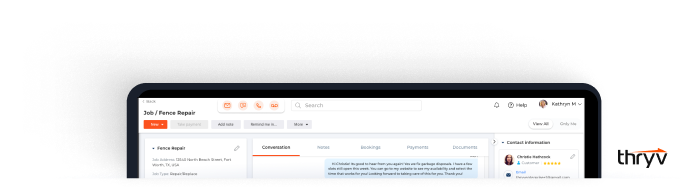
Our robust CRM software helps you build better relationships with your existing customers and nurture new leads. You can also view and manage all your communications and interactions from anywhere, including on your mobile device or desktop computer.
Customer Journey Touchpoints: From First Click to Loyal Customer
Once a customer discovers your business, the journey doesn’t stop. In fact, it’s just beginning. Each stage of the customer lifecycle includes key customer journey touchpoints that influence whether someone converts and returns. Let’s look at the major stages.
1. Awareness
Touchpoints:
At this stage, clarity and credibility matter. Customers evaluate:
- Are you responsive?
- Are reviews positive?
- Is booking easy?
- Is contact information consistent?
If messaging is inconsistent or response time is slow, drop-off happens early.
2. Consideration
Touchpoints:
- Contact form submissions
- Phone calls
- Appointment requests
- Direct messages
This is where responsiveness becomes critical. Manual follow-ups can lead to delays, and delays cost conversions. Automated follow-ups, such as confirmation emails, booking reminders, or inquiry responses, help ensure customers aren’t left waiting.
With Thryv, small businesses can automate these early interactions, reducing response time and creating a smoother transition from inquiry to booked appointment. Automation doesn’t replace personalization. It supports it.
3. Conversion
Touchpoints:
- Estimates or quotes
- Scheduling
- Payments
- Service delivery
This stage requires organization.
When customer data is scattered, it’s easy to:
- Forget follow-ups
- Miss billing steps
- Lose track of communication history
Using a CRM for small businesses helps maintain continuity. When all customer interactions (messages, payments, appointments) are visible in a single dashboard, the conversion process becomes more seamless. Centralized communication helps businesses avoid duplicated efforts and missed details, strengthening the overall customer experience.
4. Post-Purchase Experience
Many small businesses focus heavily on acquisition but overlook what happens next. This is where customer retention is won or lost.
Touchpoints:
- Thank-you messages
- Appointment reminders
- Follow-up emails
- Review requests
- Loyalty offers
Automated reminders and follow-ups help keep your business top of mind without adding daily manual work. A platform like Thryv enables businesses to schedule reminders, send automated review requests, and maintain consistent communication, supporting retention through ongoing engagement. When communication is easy and consistent, customers are more likely to return.
Identifying Drop-Off Points in the Customer Journey
Customer journey mapping isn’t just about listing touchpoints; it’s about identifying friction.
Ask questions like:
- Are customers booking but not showing up?
- Are inquiries coming in but not converting?
- Are repeat purchases declining?
- Are reviews inconsistent?
Common drop-off points include:
- Slow response times
- Confusing booking systems
- Lack of follow-up
- Missed reminders
- Fragmented communication
When you centralize communication and automate key touchpoints, these friction points become easier to manage for small businesses juggling operations, marketing, and service delivery.
Using Automation to Improve the Customer Lifecycle
Automation strengthens the journey at every stage:
| Stage | Automation Opportunity |
| Awareness | Automated social posting, enhanced local listings |
| Consideration | Instant inquiry responses |
| Conversion | Appointment confirmations |
| Post-Purchase | Review requests & follow-ups |
| Retention | Re-engagement campaigns |
The goal isn’t to automate everything, but to automate consistently.
With tools like Thryv, small businesses can:
- Gain visibility into customer interactions across channels
- Automate follow-ups and reminders
- Store customer data in one place
- Improve response time
- Support long-term retention
This creates a smoother experience without adding operational burden.
Turn Your Customer Journey Into a Growth Strategy
Customer journey mapping isn’t a one-time exercise. It’s an ongoing strategy. When you understand how customers find your business, which touchpoints influence decisions, where drop-offs occur, and how automation can improve consistency, you move from reactive to proactive. For small businesses, the key isn’t adding more tools. It’s about simplifying the experience for you and your customers.
By centralizing customer data, automating follow-ups and reminders, and maintaining consistent communication, platforms like Thryv help transform fragmented interactions into a cohesive customer lifecycle strategy. And when the journey feels seamless, customers don’t just convert. They come back.
CRM Cleanup Guide
Get your CRM data in tip-top shape — and keep it that way!
FAQ
Q: What is a customer journey map?
A: A customer journey map is a visual or documented outline of every interaction a customer has with your business, from first discovery to repeat purchase. It tracks how customers find your business, what influences their decisions, and which customer journey touchpoints shape their experience. A strong journey map includes stages like awareness, consideration, conversion, post-purchase communication, and retention. For small businesses, mapping the journey helps identify friction points, such as slow response times, inconsistent follow-ups, or communication gaps, that can impact customer retention.
Q: How do I create a customer journey map?
A: To create a customer journey map, follow these steps:
- Identify your primary customer type. Focus on one audience segment at a time.
- List all discovery channels. Document how customers find your business — search engines, social media, referrals, online directories, and more.
- Outline key touchpoints. Map out every interaction from inquiry to post-service follow-up.
- Track communication and response timing. Note where delays or confusion may occur.
- Analyze drop-off points. Look for stages where leads stop responding, or customers don’t return.
- Centralize your data. Using a CRM for small businesses helps you see communication history, appointments, payments, and follow-ups in one place, making your map more accurate and actionable.
Q: How do I use automation to improve the customer journey?
A: Automation strengthens the customer journey by improving consistency and response time. You can use automation to send instant responses to new inquiries, automatically confirm appointments, deliver reminders to reduce no-shows, request reviews after service, and re-engage past customers with follow-ups. The key is using automation to support communication, not replace personalization. When customer data and communication live in one centralized system, automation becomes more strategic.