

If you’re like most small business owners, you didn’t start your company because you love juggling software. Yet somewhere along the way, your tech stack grew. One tool for email marketing. Another for scheduling. A separate CRM. Maybe a social media scheduler. A reviews platform. An invoicing system.
Each tool promised to make life easier. But together? They may be doing the opposite.
Disconnected tools don’t just create internal headaches. They quietly cost you customers.
Let’s break down why fragmented systems hurt your business — and how connecting your CRM and marketing tools into one end-to-end system can help you save money, protect your reputation, and build stronger customer relationships.
Build Stronger Relationships With Your Customers Using Our Mobile CRM Software for Small Businesses
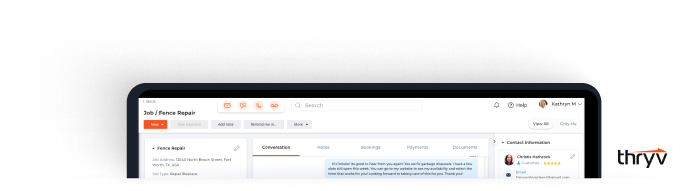
Our robust CRM software helps you build better relationships with your existing customers and nurture new leads. You can also view and manage all your communications and interactions from anywhere, including on your mobile device or desktop computer.
The Hidden Cost of Fragmented Marketing
On the surface, having multiple tools doesn’t seem like a big deal. You log into one for email, another for social posts, and another to respond to reviews. It feels manageable.
But here’s what’s happening behind the scenes:
- Customer data lives in different places
- Messages aren’t always consistent
- Follow-ups slip through the cracks
- Your team spends more time switching tools than serving customers
When your marketing systems don’t talk to your CRM, you’re working with incomplete information. Maybe your CRM shows a lead came in — but your email tool doesn’t know their service history. Maybe your social platform drives engagement — but that information never connects to your sales pipeline.
That disconnect creates gaps. And customers feel those gaps.
How Fragmented Marketing Hurts Trust
Trust is everything for small businesses. People choose local businesses because they expect personal service and consistency.
When your systems are disconnected, it becomes harder to deliver that consistency.
For example:
- A customer receives a promotion for a service they already purchased.
- A lead fills out a form but doesn’t receive a timely response because notifications are buried in another platform.
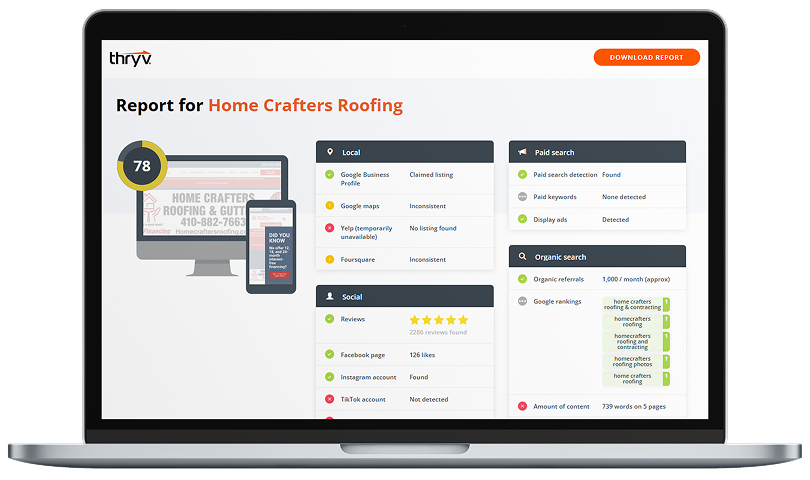
- Your website lists one phone number, but a directory lists another.
- Reviews go unanswered because they’re spread across multiple dashboards.
These small inconsistencies add up.
Customers may not know your tools are disconnected, but they know when something feels off. Confusion, delays, or mixed messaging can create doubt. And doubt can send them to a competitor.
An integrated CRM and marketing system keeps your data aligned, your messaging consistent, and your follow-up organized, which reinforces professionalism and reliability.
Why Customers Notice Inconsistencies (Even When You Don’t)
Today’s customers move quickly. They might discover you on social media, check your reviews, visit your website, and book an appointment — all within minutes.
If your tools aren’t connected, their experience can feel disjointed:
- Different branding across platforms
- Inconsistent business information
- Delayed communication
- Generic messages that don’t reflect their history
Modern customers expect businesses to “remember” them. When you don’t — even unintentionally — it feels impersonal.
Connecting your CRM tools allows you to:
- See every interaction in one place
- Personalize messages based on real data
- Track the full journey from first click to final invoice
- Deliver seamless communication at every stage
That kind of experience builds loyalty. And loyalty drives repeat revenue.

We’re sharing our expert tips to help you boost productivity, eliminate time-wasting tasks, and more in this free guide.
Download Now
The Financial Impact of Disconnected Tools
Beyond trust, there’s a direct financial cost to managing multiple systems.
Here’s where money slips away:
1. Paying for Overlapping Tools
Many businesses unknowingly pay for features they already have in another platform.
2. Wasted Time
Time spent logging in and out of systems, exporting spreadsheets, or manually updating records is time not spent closing deals or serving customers.
3. Missed Follow-Ups
If reminders or lead alerts don’t sync properly, potential customers may never hear back.
4. Poor Data Visibility
When reporting lives in different places, it’s harder to see what’s actually working — which means you might be spending on marketing tactics that aren’t generating revenue.
An end-to-end CRM and marketing system helps eliminate redundancy, automate tasks, and give you a clear view of performance in one dashboard.
The Value of Centralized Marketing
Centralized marketing isn’t just about convenience. It’s about control.
When your marketing, CRM, scheduling, reviews, and payments live in one connected system, you gain:
- A single source of truth for customer data
- Consistent branding across every channel
- Automated workflows that nurture leads
- Clear reporting from visibility to conversion
Instead of piecing together data, you can see the entire customer journey in one place.
That clarity allows you to:
- Respond faster
- Personalize communication
- Identify high-value customers
- Strengthen long-term relationships
And when your systems work together, your business feels more organized — both internally and externally.
Consistent Brand Experience = Stronger Relationships
Consistency builds confidence.
When your messaging, customer records, appointments, reviews, and payments are connected, your brand feels polished and dependable.
Customers experience:
- Faster responses
- Personalized communication
- Accurate information
- Seamless booking and billing
That smooth experience makes them more likely to return — and to recommend you.
And from your perspective? You gain peace of mind knowing your operations support your marketing instead of working against it.
Bringing It All Together
Small businesses don’t lose customers overnight. They lose them in small moments — a missed email, an inconsistent message, a delayed follow-up.
Disconnected tools create those moments.
Connecting your CRM tools into one end-to-end system doesn’t just save money. It protects trust, improves efficiency, and strengthens every stage of the customer relationship.
With a centralized platform for marketing execution, consistent branding, and customer management, you spend less time managing software and more time serving customers.
Because at the end of the day, customers don’t care how many tools you use.
They care how smoothly you serve them.
FAQs
Q: Why are disconnected CRM tools bad for small businesses?
A: Disconnected CRM tools create data silos, inconsistent messaging, and missed follow-ups. This can hurt customer trust, waste time, and ultimately lead to lost revenue. An integrated system ensures customer data, marketing, and communication are aligned.
Q: What is an end-to-end CRM system?
A: An end-to-end CRM system connects marketing, customer communication, scheduling, invoicing, and reporting in one platform. This allows small businesses to manage the entire customer journey — from first interaction to repeat purchase — without switching tools.
Q: How does a centralized marketing platform improve customer relationships?
A: A centralized marketing platform keeps customer data, messaging, and touchpoints consistent. This enables faster responses, personalized communication, and a smoother customer experience, which builds trust and increases retention.